
Millions of Americans suffer with joint pain, stiffness, and loss of range of motion due to osteoarthritis (OA). There is no cure for this degenerative condition, so treatment plans generally focus on pain relief and managing symptoms through physical therapy, low-impact exercise, steroid injections, healthy weight management, occupational therapy, and anti-inflammatory medication.
Ongoing research has led to several new and emerging OA treatments, discussed below, that are showing promise in not just alleviating symptoms but also addressing the root causes of inflammation and cartilage degeneration.
Regenerative Therapies
Regenerative therapies focus on working with the body to help it heal itself. Although there are several of these types of therapies being studied, the two most well-known are:
- Platelet-Rich Plasma (PRP) Injections – Clinicians take blood from a patient, put it in a centrifuge, and concentrate blood cells that are important to healing into plasma. The PRP is then injected into the target area to stimulate cell regeneration and accelerate healing.
- Stem cell therapy – Similar to PRP injections, stem cells are taken from a patient’s bone marrow or fat and then injected into affected areas to reduce pain and inflammation, slow disease progression, or attempt to repair damage to the cartilage.
Cutting-Edge Drug Therapies
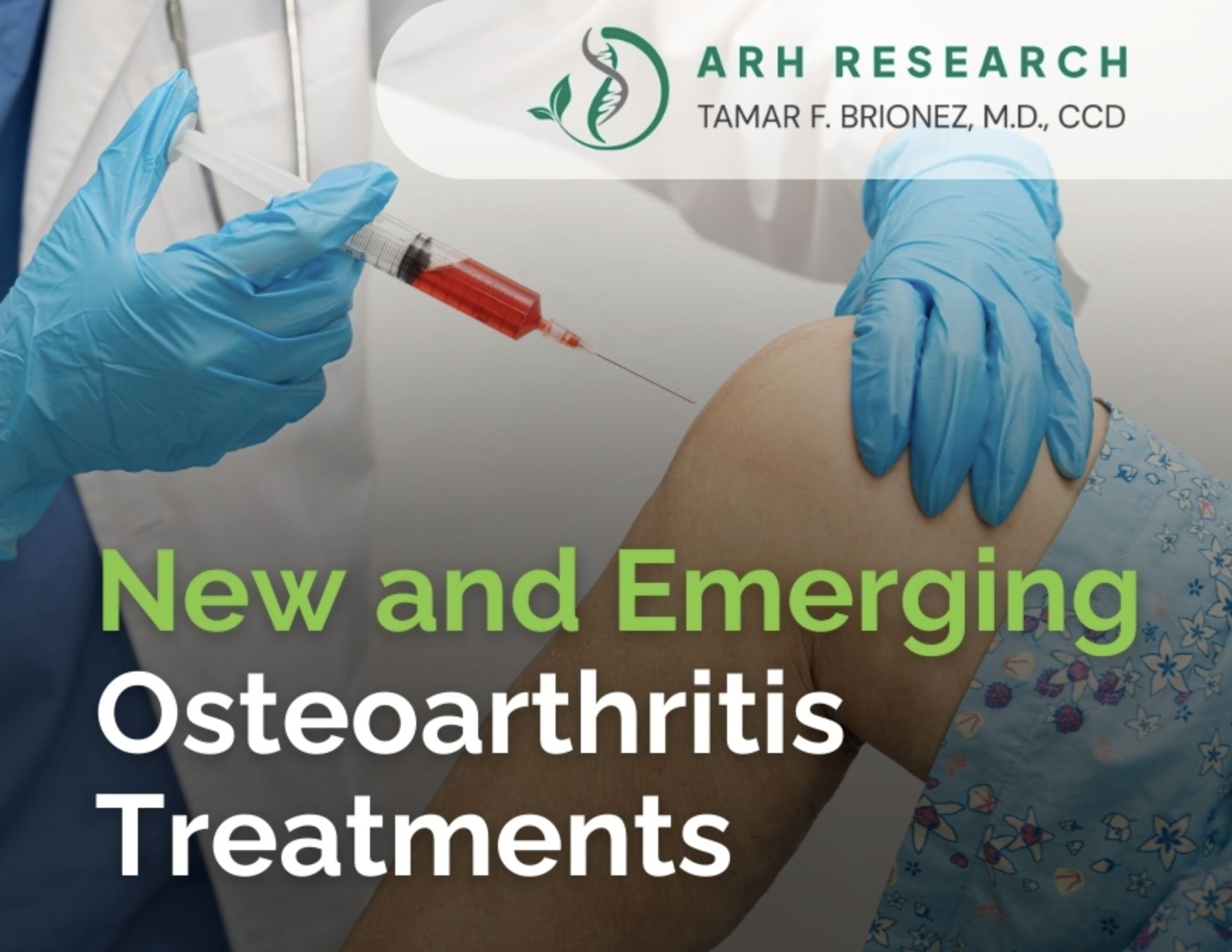
(Click Image Below To Learn More About the Osteoarthritis Study)
Disease-Modifying Osteoarthritis Drugs (DMOADs)
Moving beyond simple pain management, researchers are developing DMOADs to slow or stop disease progression to preserve the existing joint structure or even, in some cases, reverse existing structural damage in the cartilage.
Nerve Growth Factor (NGF) Inhibitors
Although opioid pain relievers are effective, long-term use can be problematic, eventually requiring increased doses to achieve the same effect or even resulting in opioid dependence. NGF inhibitors are targeted, non-opioid biologic pain relievers that block the NGF protein and prevent it from binding to the receptors that allow the nervous system to transmit pain signals.
Targeted Topical Anti-Inflammatories
Nonsteroidal anti-inflammatory drugs (also known as NSAIDs) have long been used to reduce inflammation and provide pain relief for OA sufferers. Unfortunately, long-term use or overuse can lead to stomach pain or bleeding or kidney and heart issues. Newer versions of NSAIDs include topical versions that seem to provide more targeted relief and have fewer unwanted side effects.
Acupuncture
For OA patients interested in non-pharmacological treatments, acupuncture has shown positive signs as an affordable and noninvasive option to reduce OA-related inflammation and pain by triggering the body’s natural painkillers – endorphins and serotonin. Interestingly, acupuncture might do more than just help relieve pain, swelling, and stiffness, though. It may also help slow disease progression by increasing flexibility and range of motion in affected joints.
Personalized Treatment Plans
While these new and emerging treatments are exciting if you are suffering with OA, the most important step to take is talking to a rheumatologist. The health professionals at Advanced Rheumatology of Houston have years of experience in treating patients with OA and developing personalized treatment plans specific to their symptoms, needs, and goals. It’s never too late to start living a more comfortable life.
Schedule an appointment to speak with us about your OA today!